Write Track
Scientific writing coaching
Do you struggle to write?
In science, it’s often said that if it’s not communicated, it wasn’t done. As scientists, the vast majority of what we do is writing; yet many of us struggle to communicate our ideas clearly in writing. At best, this makes our work slow, laborious, and painful, robbing us of some of the joy of discovery. At worst, it results in negative paper reviews and failure to secure grant funding.
Do you identify with any of these issues?
I feel like writing is an obstacle, and it takes forever to write anything
I lack confidence in my writing
I don’t know how to start writing
I don’t know when to stop writing
I can't seem to get my reviewers to be as excited about my great ideas as they should be
I find myself asking whether reviewers have even read my proposal / paper
You’re not alone!
Science writing is a skill, and it’s one that few of us are taught. We are often forced to learn by trial and error; but if you’re a scientist in today’s academic landscape, you don’t have time for trial and error.
We can help!
At Write Track, we offer live, instructor-led courses that will help give you the tools you need to communicate your science effectively.
If you’re ready to learn useful skills that will help you break the cycle of frustration and make writing less painful—and, dare we suggest, even enjoyable—then Write Track is here for you.
Getting your message across:
A proposal-writing bootcamp for early career researchers
Are you an early-career researcher learning to navigate the funding landscape?
Have you received panel reviews that left you wondering whether the reviewers even read your proposal?
Do you wonder what you can do to give your ideas the best possible shot at being funded?
If questions like these sound familiar, this proposal-writing bootcamp might be for you.
A proposal is a story
Our job as proposers is to tell a story; and that story has to be one that the reader can understand.All too often, proposers bury the vital elements of their stories somewhere in the depths of the proposal, asking the reviewers to work hard to discover them. Or they include far too much detail about basic concepts while glossing over the key details; or jump into the middle of an argument that is incomprehensible to reviewers who are not as familiar with the specific topic as the proposal writer.

This leaves reviewers feeling exhausted and annoyed, and often leads to a low score.
Make the reviewers happy

By contrast, a proposal that leads the reviewer step by step from problem to proposed solution to perceived impact is much more likely to leave the reviewer feeling that they understand the proposal. And this leaves them feeling satisfied.
In the best case, it leaves them feeling excited and inspired!
Clarity is the key
Clearly, there are no guarantees in this business — but leaving reviewers happy is much more likely to result in a high score than leaving them exhausted and annoyed because they can’t understand what the proposal is trying to say.
A True Story from Write Track's founder
A few years ago, I was on a review panel in which we had several proposals from self-described early-career researchers. One such proposal was chock full of good ideas and solid methods; but it was very confusingly written.Some of the panel members took the time to review it thoroughly, reading it more than once, and teasing the message out of the text.But some didn’t.One of the primary reviewers read it once, didn’t understand it, and gave it a very low score. During the discussion, the rest of the panel tried to convince this reviewer that the proposal actually had merit, but in the end, the aggregate score pushed it into unlikely-to-be-selected territory.
I felt very frustrated by this situation: had the proposal simply been clearly written, the outcome might have been very different.
I decided that I could help: and the idea for this bootcamp was born.
How does the Getting Your Message Across boot camp work?
Each boot camp cohort works together for five weeks.
Two weeks before the start of each boot camp, all participants submit a five-page proposal draft. As your instructor, I do an initial reading of each proposal, and tailor the course exercises to the specific issues I observe.
Each week, we meet for a two-hour live video call.
During these calls, we review key concepts, such as proposal organization, paragraph structure, etc. We also participate in exercises created specifically to help us practice the skills we need to improve the clarity of our writing. Finally, we discuss the previous week's homework, which leads us to the next point:
There is homework!
Each week, participants either: read and comment on one or more fellow participant's current draft proposal, focusing on the concepts we covered that week; or revise their own draft proposal based on comments from both the instructor and fellow participants.One week after the final live session, participants submit a final draft to me, and I return it with final comments no more than three weeks after our last live session.
This is a collaborative effort.
The success of this course depends on full engagement by all participants. Therefore, we expect all participants to attend all sessions and to complete all the homework assignments.At the end of the course, participants will have:
Learned how to craft a clear, compelling proposal that is a pleasure to read and review
Gained fundamental writing skills that are transferable to any form of science writing, including journal articles, job applications, and more
Gained confidence in their ability to tell the story of their ideas
Learned how to give review comments that are constructive, honest, and kind
Worked with their colleagues in a supportive and uplifting collaborative learning environment
Click here to sign up for information about the next Getting Your Message Across boot camp!
About me
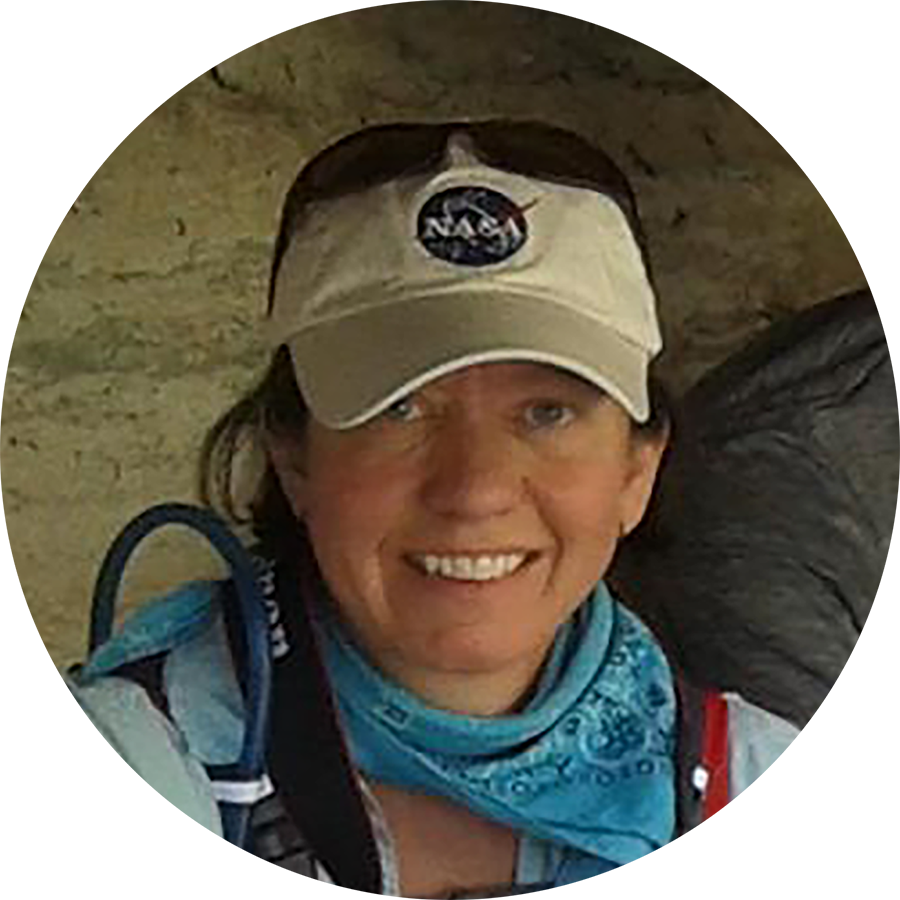
Write Track Coaching was founded by me, Dr. Rebecca Ghent. I have been working in the field of Earth and Planetary Science for 25 years, and I was a university professor for 14 of those years.I have been a student; a postdoctoral fellow trying to establish myself as an independent researcher; an overworked new faculty member navigating the simultaneous demands of teaching, establishing a funded research program in a new country, and professional service; a tenured faculty member focused on keeping funding flowing to my research group; a full-time soft-money researcher living entirely on grants, without institutional salary support; grant proposal and journal manuscript reviewer; and review panel member.In inhabiting these roles, I have read, reviewed, and written thousands of pieces of scientific writing. I have also experienced all the struggles with writing blocks, frustrating reviews, and the feeling that writing takes far too long, when time is always of the essence. On the other end of those 25 years’ experience, I have learned how to write clearly, how to know when I’m ready to write, and to learn that scientific writing can actually be quite fun!
I’d love to show you what I’ve learned. Join me for a course!
Contact Write Track
Sign up to be notified about the next available course, ask a question, or send a friendly greeting!